
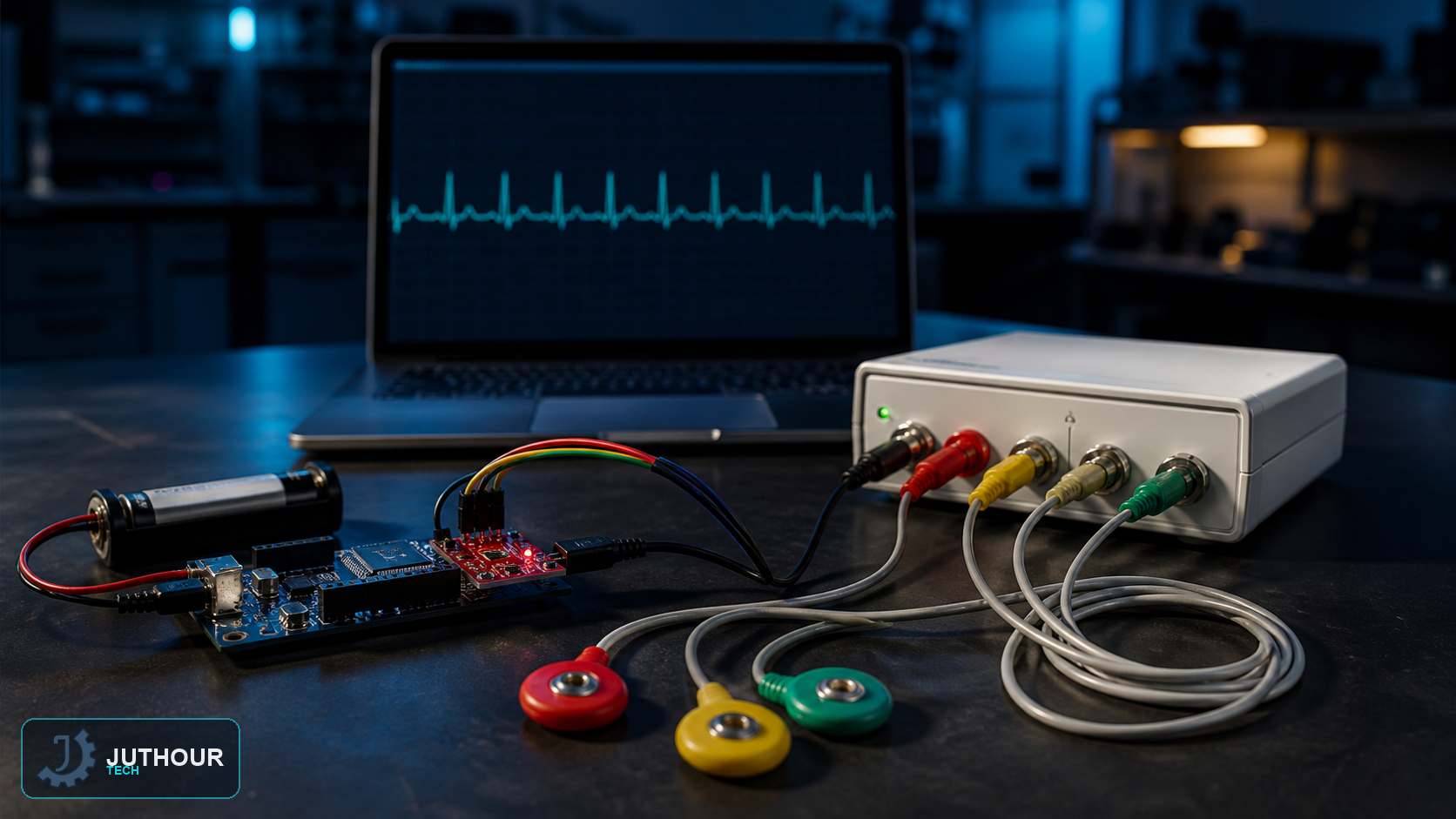
The AD8232 is an analog front end for conditioning a single-lead ECG signal from skin electrodes. This experiment displays a waveform for learning and does not provide a diagnosis.
Wiring and sampling
Connect the AD8232 output to an ADC input and use LO+ and LO- for lead-off detection if needed. Sample regularly at a useful rate such as 250 samples/s or one chosen for the filter and application; one sample every 100 ms is far too slow for a useful ECG waveform.
Signal quality
The signal is sensitive to motion, electrode contact, and electrical interference; it is not motion-tolerant. Use secure placement, appropriate filters, and reject data when a lead is off.
Use limits
Do not use this circuit to diagnose a condition or make a health decision. Medical devices require very different isolation, design controls, validation, and certification.
Leave your comment