
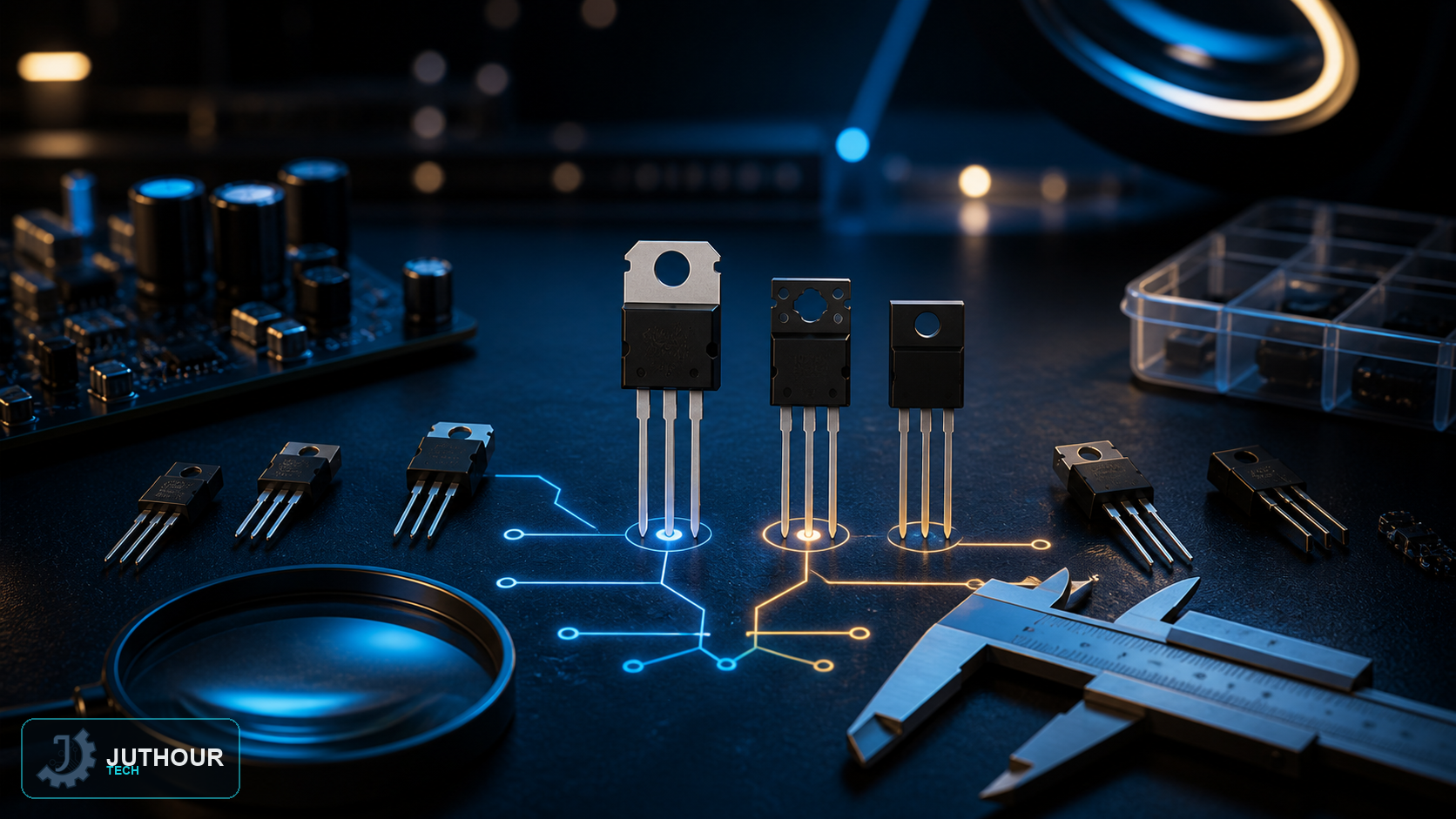
Many electronics hobbyists run into the same recurring situation: a transistor fails in an old circuit, or the exact part needed simply isn't available locally. Fortunately, a transistor can usually be substituted with a different type from another manufacturer, as long as the essential electrical specifications match.
Specifications you need to match
Before picking a substitute, check several key points: the maximum collector-emitter voltage, the maximum current the collector can carry, the transistor type (NPN or PNP), the current gain (Beta or hFE) - which varies between types and affects the biasing resistor values used in the circuit - the maximum temperature the transistor can withstand before it's damaged, and finally the package shape, which needs to physically fit the circuit or board design.
Practical examples of common substitutes
Well-known examples in this area include: the BC547 transistor can be replaced with a 2N2222, while the BC548 can be replaced with either a 2N3904 or a 2SC1815. For power transistors, an IRFP4004 can take the place of an HY4004 in many applications.
An important note before substituting
Even though different transistor types can sometimes look quite similar, checking each type's datasheet remains a necessary step that can't be skipped, to make sure all the electrical and thermal values actually match your specific application's requirements before finalizing any substitution.
You can find a wide range of transistors of all types at Juthour Tech, along with technical support to help you pick the right substitute for your project.
Leave your comment