
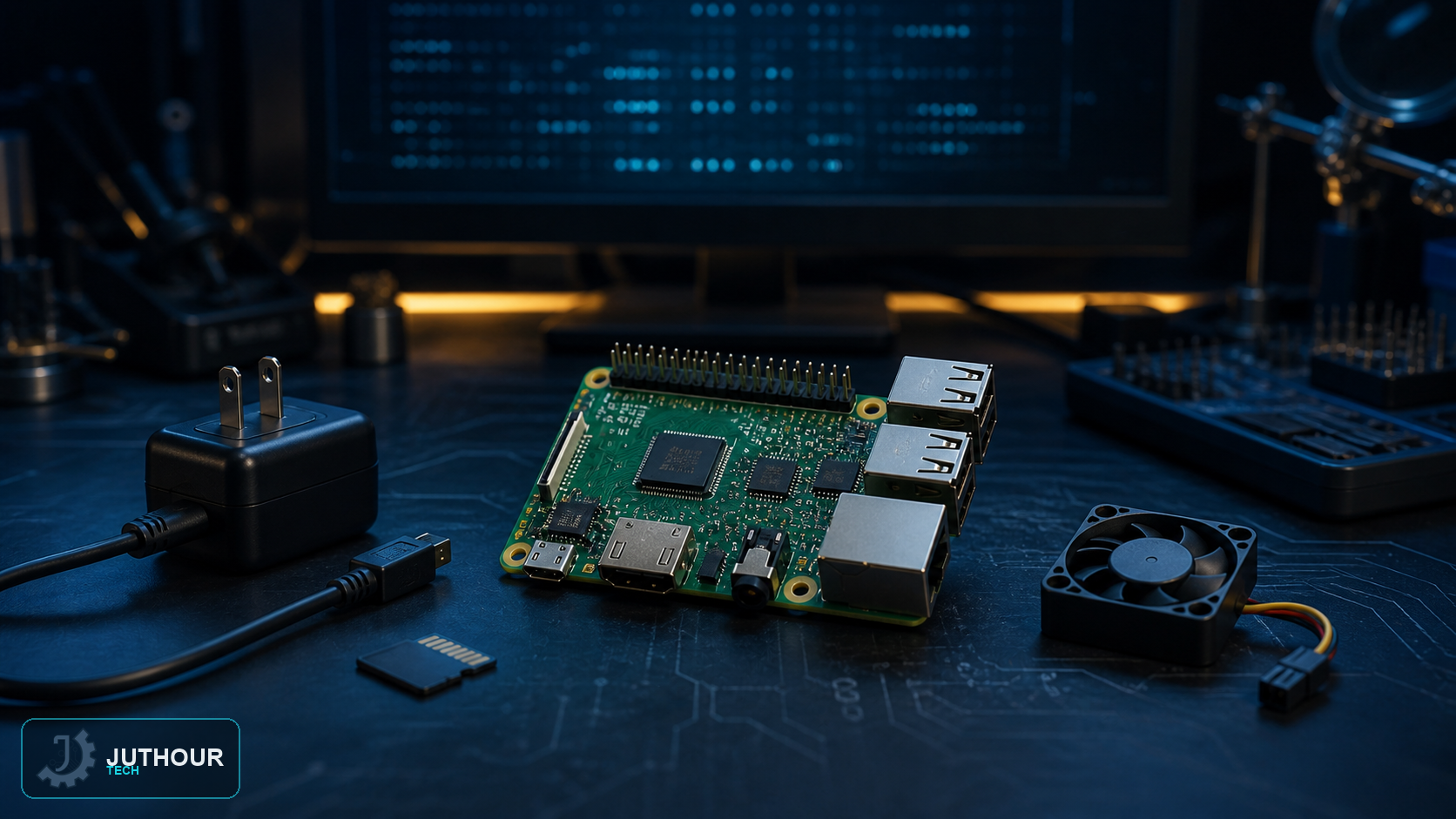
The Raspberry Pi is a small computer roughly the size of a credit card, developed by the UK's Raspberry Pi Foundation with the goal of simplifying computer science education in schools and making it accessible to as many students and hobbyists around the world as possible at a very low cost.
Components and specifications
The Raspberry Pi contains a main processor, a graphics processor, and RAM that went up to 256MB in the earliest models (and has grown substantially in newer versions). It's sold as a bare board only, without a screen, keyboard, mouse, storage, or power adapter - users need to supply these accessories themselves. The earliest models started at $25 for the Model A and $35 for the Model B, prices that made the device a popular choice worldwide for learning programming and electronics together.
Key uses
Raspberry Pi's uses go well beyond education, extending to: smart home automation systems, robots, watercraft, and drones, remote live-streaming cameras, environmental temperature and humidity monitoring stations, turning it into a smart TV device, and even using it as a full Linux server to run services like HTTP, FTP, SSH, VPN, and MySQL databases - all the way to clustering several units together to build miniature supercomputers for educational experiments.
How do you start learning?
Raspberry Pi runs the free, open-source GNU/Linux operating system. Beginners are usually advised to follow dedicated video tutorials online, alongside simplified educational resources covering the basics of electronics, control systems, robotics, and working with Linux - no prior technical background required.
You can find Raspberry Pi boards and accessories at Juthour Tech, and start exploring this wide world of applications.
Leave your comment