
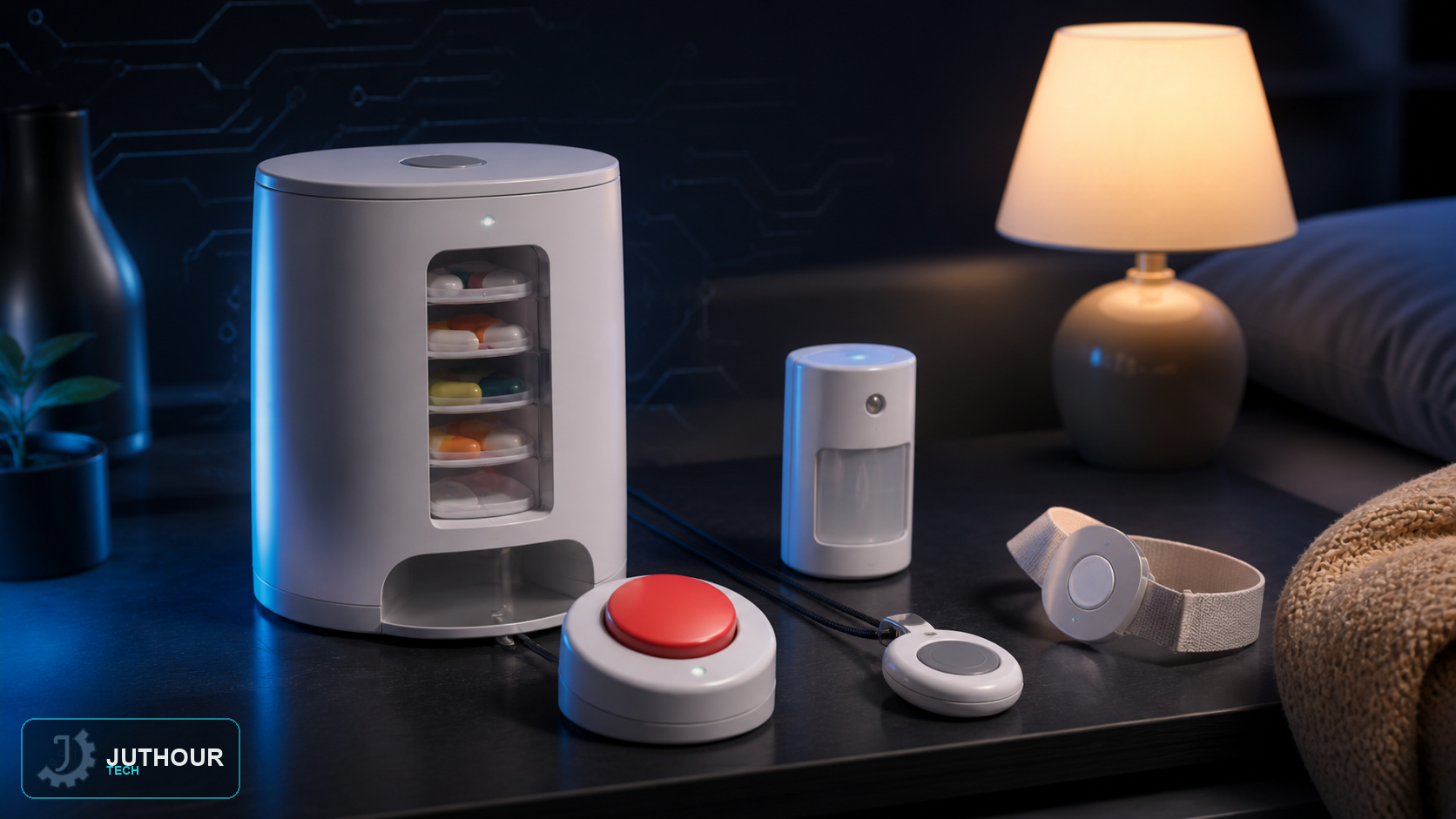
Combining electronics with automation engineering opens up a wide field for designing tools that help elderly people stay independent in their homes longer, whether through ready-made market devices or simple projects that can be built with Arduino.
Common daily challenges
Elderly people usually face recurring challenges: weakening memory that leads to losing important items like keys and medication, joint pain that makes bending down or carrying cleaning tools exhausting, declining eyesight that makes reading small print difficult, and reduced balance that raises the risk of falls.
Electronic solutions for each challenge
Each challenge is met by a category of tools: small key-finder devices that emit sound or light when searched for, helping locate misplaced items quickly; robotic vacuum cleaners that remove the need to bend down and carry equipment; magnifying desk lamps that make reading easier; remote grabber tools that let a person pick things up off the floor without bending; and modern mobility aids that help a person stay active and independent.
From ready-made product to personal project
Many of these functions can be rebuilt as simple Arduino projects: a medication reminder using a buzzer and timer, a tilt sensor that detects a fall and sends an immediate alert to a family member, or a motion-responsive night lighting system that reduces the risk of moving around in the dark — all of these are as educational as they are useful.
You can find the sensors and components needed to build elderly-assistance projects at Juthour Tech.
Leave your comment