
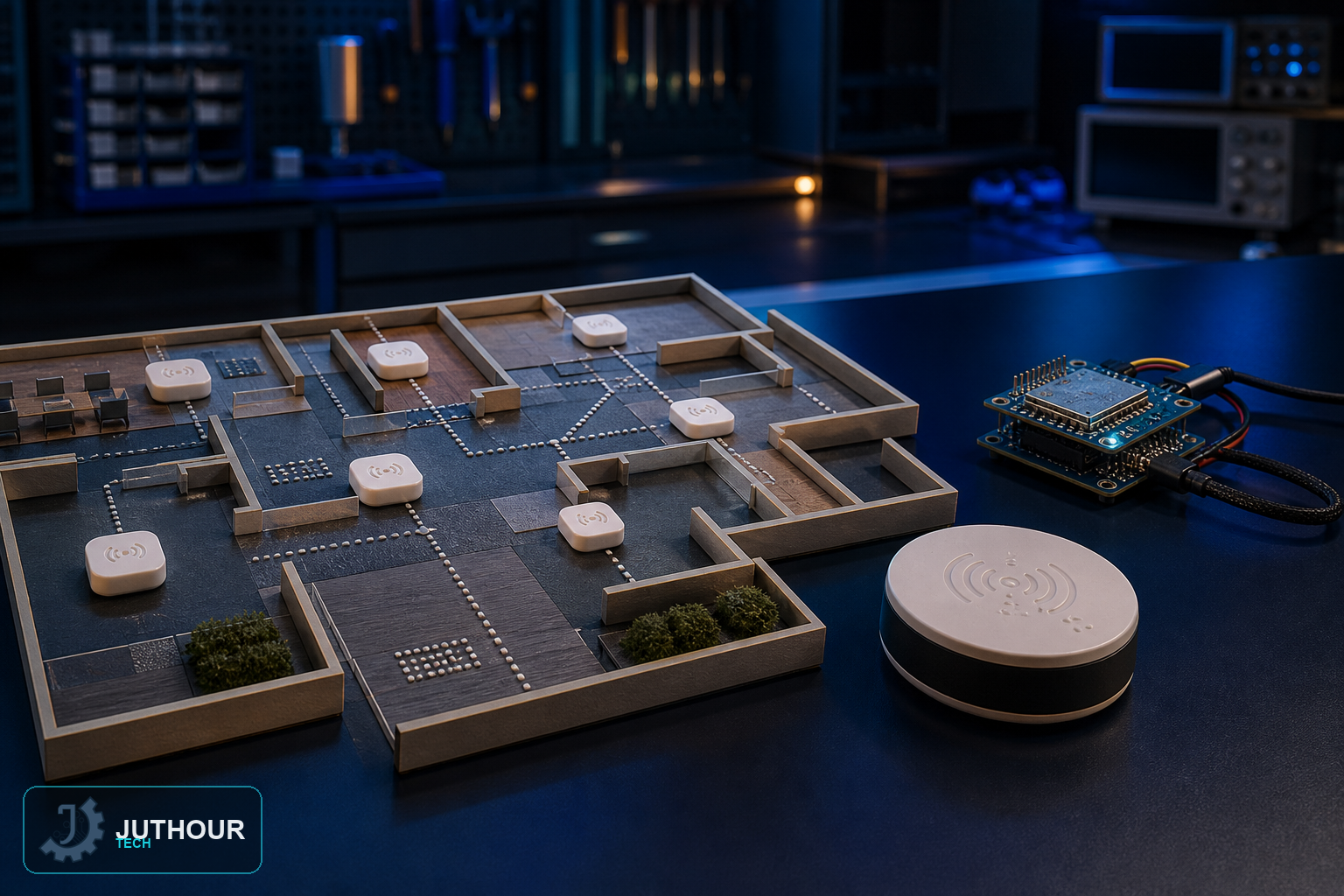
Prototype optional RFID waypoints with user-selected audio or haptic cues and test them with blind users in a controlled, familiar environment.
Prototype objective
The project focuses on sensing, state logic, feedback, and a low-voltage bench prototype that can be tested safely. Define user requirements, success criteria, and failure cases before considering any real deployment.
Suggested components
A Wemos-compatible board, an RC522-class RFID reader with blank waypoint tokens, a vibration puck, optional low-volume audio module, large acknowledgement button, breadboard, and jumper wires.
Wiring and implementation
Connect the RFID reader over its documented 3.3 V SPI interface, drive the vibration and audio modules through suitable stages, and keep cue selection, volume, acknowledgement, and disable controls accessible.
Use a regulated supply and common ground, never drive loads directly from controller pins, and add current limiting, suitable interface stages, flyback protection for inductive loads, and logic-level conditioning as required.
Test plan
Co-design the interaction with intended users; test reach, force, timing, visual, audio and haptic alternatives, false and missed activation, privacy, power loss, and a reliable manual alternative.
Use limitations
RFID waypoints are not a mobility aid and must not replace a cane, guide dog, orientation training, accessible signage, or human assistance. Religious spaces also require community consultation.
Next step
Document the schematic, library versions, calibration, measurements, and failure cases. Whenever the application involves safety, health, children, buildings, or equipment, use qualified specialists and applicable standards rather than relying on a hobby prototype.
Leave your comment