
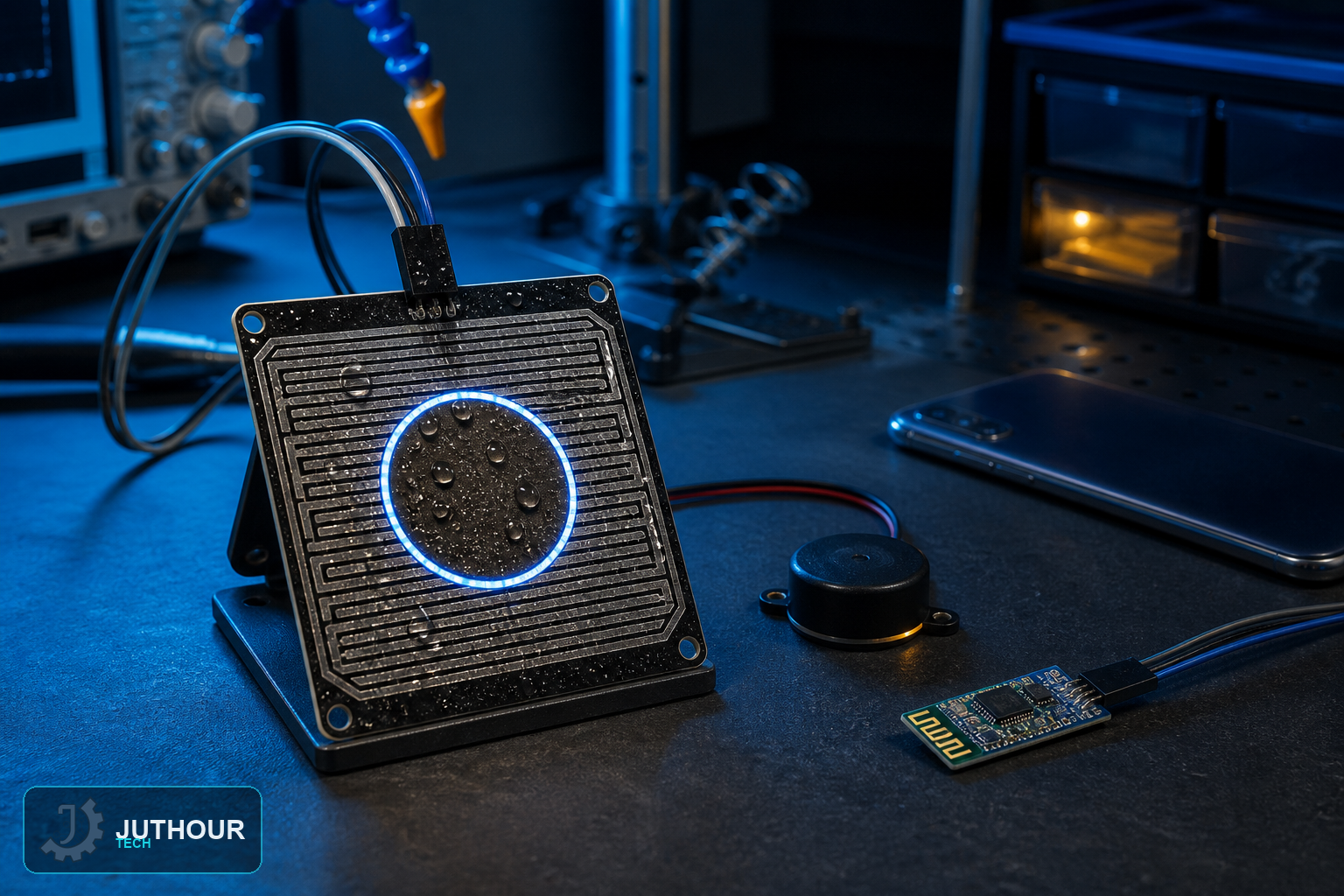
Co-design a visual and phone-based rain cue with Deaf users, retaining official weather alerts and multiple accessible notification channels.
Prototype objective
This project focuses on measurement, state logic, feedback, and a low-voltage bench prototype that can be tested safely before any more advanced application is considered.
Suggested components
An Arduino Uno, a rain sensor module (operates at 3-5V DC, 40×16mm detection area), a yellow LED, an HC-05 Bluetooth module, a breadboard, and jumper wires.
Wiring and implementation
The rain sensor connects to digital pin 2, the LED connects to pin 4, and the HC-05 connects over software serial on pins 10 and 11.
Use a regulated supply and common ground, drive loads through suitable interface stages, add flyback protection for inductive loads, and condition logic levels where required.
Test plan
Test drizzle, splashes, drying time, night brightness, Bluetooth loss, and battery state, then validate preferred cues directly with Deaf users.
Use limitations
The prototype is only one optional notification channel. It must not replace official severe-weather alerts, emergency instructions, or the user's preferred accessible systems.
Next step
Document the schematic, library versions, measurements, and failure cases before extending the prototype, and consult qualified specialists and applicable standards whenever safety, health, vehicles, or industrial equipment are involved.
Leave your comment