
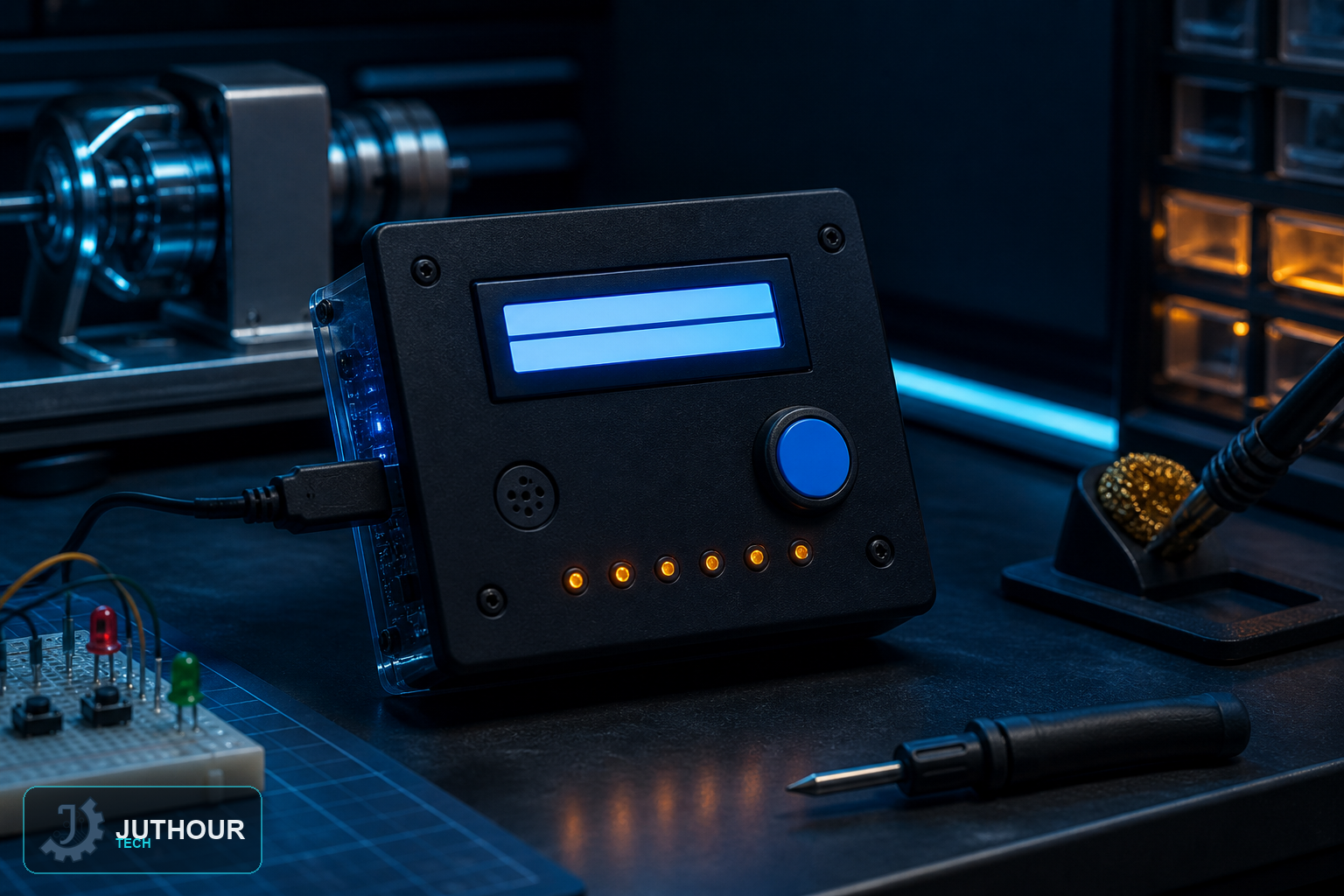
Build a button-driven learning aid that presents the steps of wudu in order with clear visual and audio feedback.
Prototype objective
The project focuses on sensing, state logic, feedback, and a low-voltage bench prototype that can be tested safely. Define user requirements, success criteria, and failure cases before considering any real deployment.
Suggested components
An Arduino Uno R3, a 16x2 I2C LCD (address 0x27), a push button, an active buzzer, a breadboard, and jumper wires.
Wiring and implementation
The button connects to digital pin 2 with an internal pull-up enabled, the buzzer connects to pin 3, and the LCD uses I2C wiring, sparing the need for multiple display pins.
Use a regulated supply and common ground, never drive loads directly from controller pins, and add current limiting, suitable interface stages, flyback protection for inductive loads, and logic-level conditioning as required.
Test plan
Verify the selected wording with a trusted educational source, debounce the button, test step order and restart behavior, and provide a silent mode and an easy reset.
Use limitations
This is an optional learning aid, not a religious authority. Wording and practice may vary, so make the sequence editable and consult qualified teachers for guidance.
Next step
Document the schematic, library versions, calibration, measurements, and failure cases. Whenever the application involves safety, health, children, buildings, or equipment, use qualified specialists and applicable standards rather than relying on a hobby prototype.
Leave your comment