
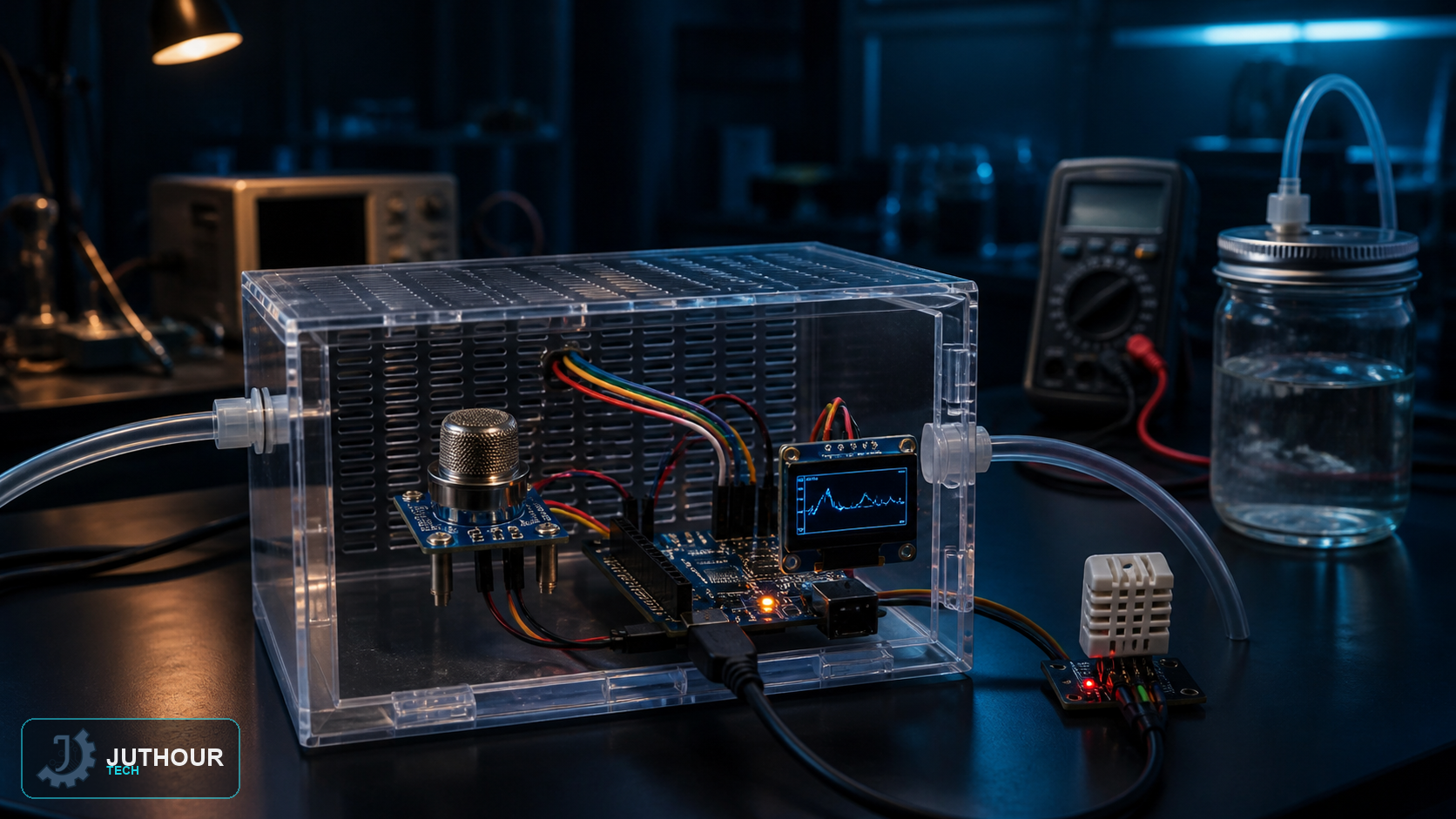
The MQ-135 responds broadly to several gases and vapors. After calibration it can track relative air-quality changes, but by itself it is not a selective, accurate carbon-dioxide meter.
What the module measures
The SnO₂ sensing resistance changes with a gas mixture and with temperature and humidity. The analog output represents that resistance through the module circuit; it does not identify which gas caused the change.
Burn-in and calibration
Follow the initial conditioning guidance for the selected sensor and allow stabilization on each startup. Establish a baseline in known air and calculate Rs/R0 when appropriate. Do not trust a library PPM value unless the gas curve, calibration, and environmental conditions are known.
Interpreting results
Present the raw value or relative change as a trend and log temperature and humidity for context. Use a suitable calibrated selective sensor, such as NDIR, when the requirement is actual CO₂ measurement.
اترك تعليقا