
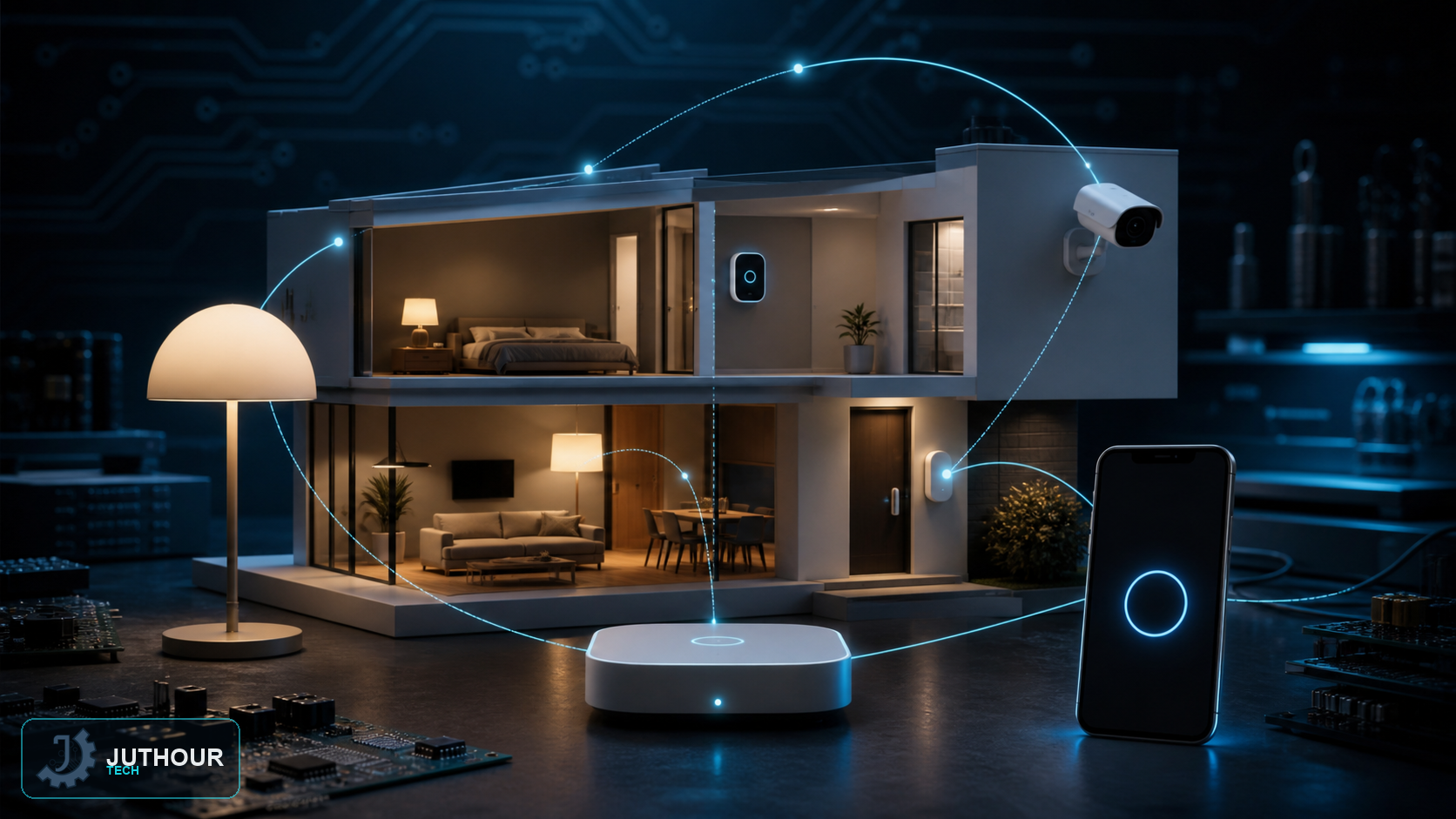
The term "smart home" refers to connecting a home's various devices together so they can communicate with each other and respond to remote commands, usually through a smartphone app; the "smart" part describes the devices themselves, not the building's architecture.
Main areas of home automation
Smart home systems span several areas: heating, cooling, and ventilation control that learns from occupants' behavior to balance comfort and energy savings; lighting systems that respond to motion or adjust brightness based on available natural light; security systems like smart locks that open via proximity or a passcode, plus gas and smoke detectors; and entertainment devices connected to streaming services with voice or gesture control features.
The central role of small controllers
Controllers like Arduino and Raspberry Pi serve as the "driving brain" of many of these systems, putting a simple home-automation build within reach of any electronics hobbyist, with no need for expensive off-the-shelf products. The Bluetooth-based home appliance control project covered earlier is a direct, practical example of this principle.
The future within the Internet of Things
The smart home fits within the broader Internet of Things movement, where connectivity between home devices is expected to keep expanding, along with their ability to make automatic decisions based on data from surrounding sensors with no direct human intervention.
You can find the sensors and controllers needed to build your own home automation project at Juthour Tech.
اترك تعليقا