
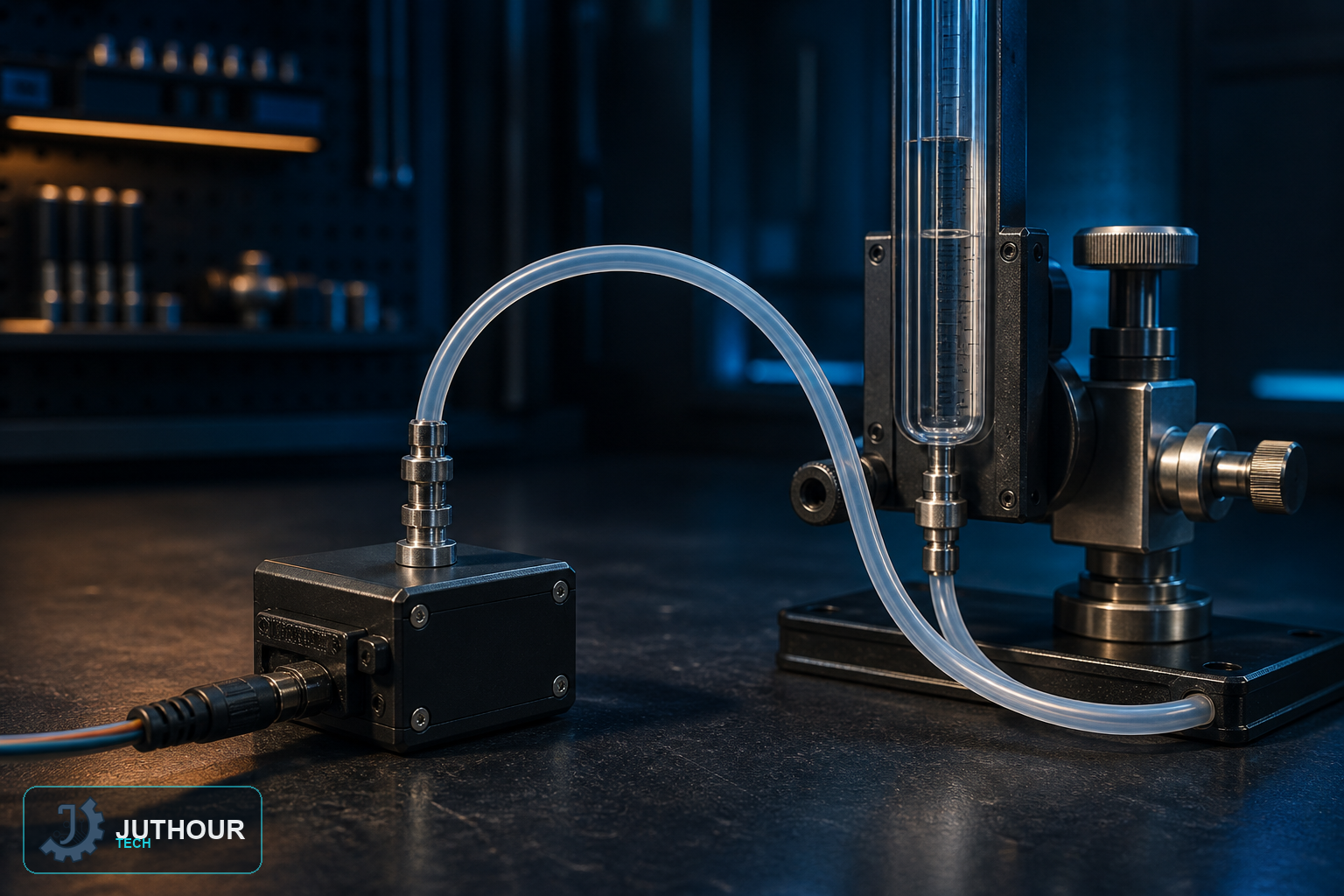
This 0–40kPa air pressure module measures pressure directly through a small physical tube rather than sensing barometric pressure through an open chip like the environmental sensors we've covered before, making it suited for a different kind of project entirely.
How it's different from a barometric sensor
We've covered environmental pressure sensing before with barometric modules that read ambient atmospheric pressure through an exposed sensing element. This module instead connects via a small 2.5mm tube, letting it measure pressure at a specific point in a sealed or connected air system — closer to how a pressure gauge works than how a weather sensor works.
Components needed
An Arduino Uno, a 0–40kPa air pressure sensor module, and jumper wires.
Wiring it up
The module communicates over a two-wire digital interface: its data output connects to pin 2 and its clock signal to pin 3, alongside 5V power and ground.
Reading the pressure value
The sketch sends clock pulses to the module, which responds with a 24-bit reading split across three bytes. Once assembled, the sketch converts that raw value into a usable pressure figure and streams it to Arduino's Serial Plotter, showing pressure changes over time as a live graph rather than a single static number.
Where this is used
Because it reads pressure through a physical tube connection rather than ambient air, this sensor fits applications like monitoring air pressure in a sealed system or pipe, and — connected to a submerged tube — indirectly measuring liquid depth in a tank through the water pressure pushing on the tube's opening.
You can find 0–40kPa air pressure sensor modules at Juthour Tech.
اترك تعليقا