
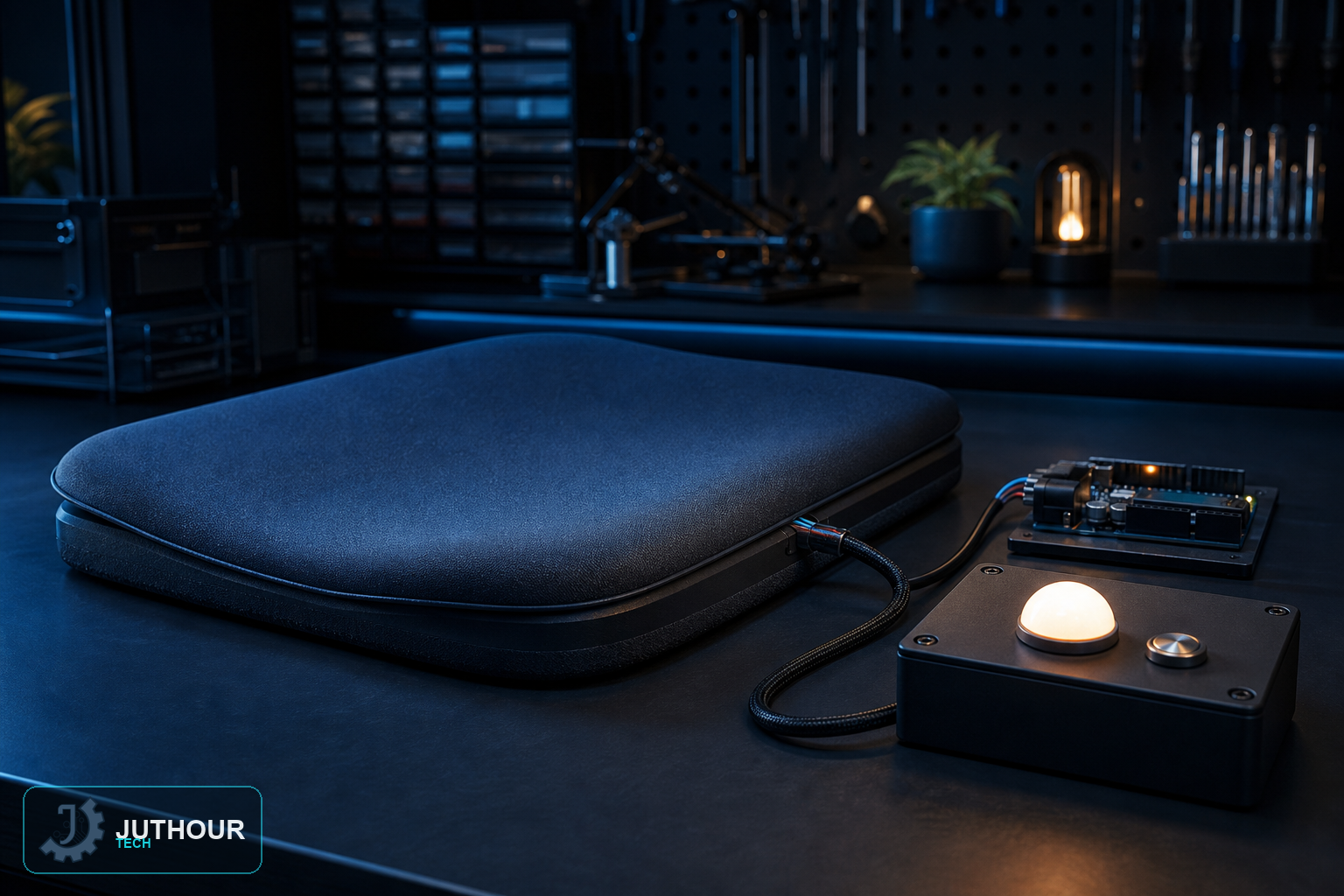
Build an adjustable sitting-break reminder using a suitable occupancy sensor, quiet cues, and user-controlled timing without judging posture or productivity.
Prototype objective
The project focuses on sensing, state logic, feedback, and a low-voltage bench prototype that can be tested safely. Define user requirements, success criteria, and failure cases before considering any real deployment.
Suggested components
An Arduino-compatible board, a force-sensitive resistor or load-cell module with a suitable amplifier, a large dismiss button, a soft indicator light, a breadboard, and jumper wires.
Wiring and implementation
Connect an FSR through a documented voltage divider to an analog input, or connect a load cell through a suitable amplifier module. Add filtering and hysteresis, keep the sensor within its rated load, and drive indicators through appropriate interfaces.
Use a regulated supply and common ground, never drive loads directly from controller pins, and add current limiting, suitable interface stages, flyback protection for inductive loads, and logic-level conditioning as required.
Test plan
Prefer a pressure or load sensor in a bench seat pad; test different body weights with safe test loads, short absences, timer reset, quiet mode, power loss, privacy, and easy disablement.
Use limitations
An ultrasonic reading is a poor measure of sitting and the reminder is not ergonomic or medical advice. Comfort, mobility, and break needs vary by person.
Next step
Document the schematic, library versions, calibration, measurements, and failure cases. Whenever the application involves safety, health, children, buildings, or equipment, use qualified specialists and applicable standards rather than relying on a hobby prototype.
اترك تعليقا