
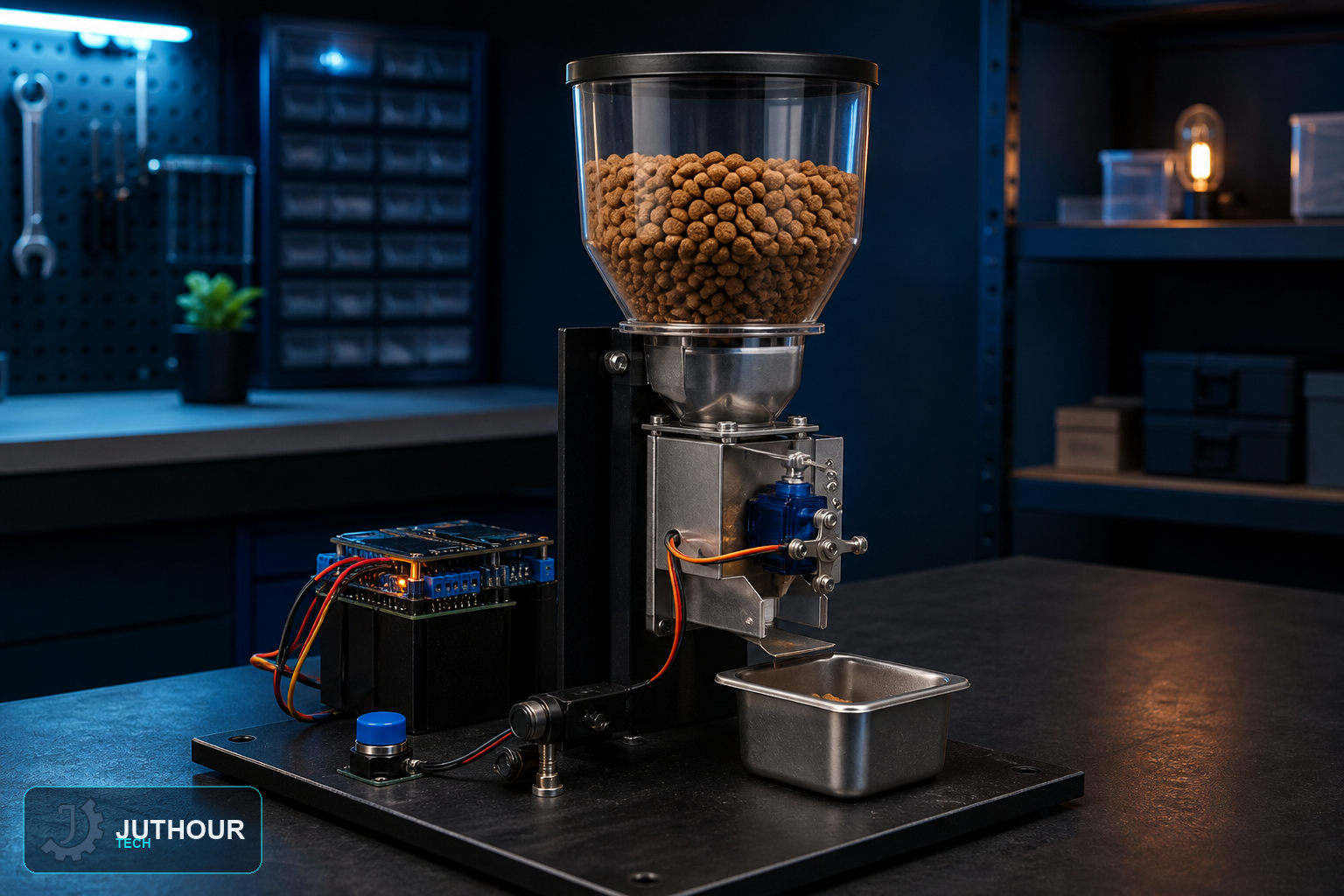
Prototype a measured dispensing cycle with position feedback, jam detection, local manual operation, and confirmation that a command actually completed.
Prototype objective
The project focuses on sensing, state logic, feedback, and a low-voltage bench prototype that can be tested safely. Define user requirements, success criteria, and failure cases before considering any real deployment.
Suggested components
A Wemos D1 board, an SG90 servo motor, an active buzzer, a breadboard, and jumper wires.
Wiring and implementation
The servo connects to pin D1 and the buzzer to pin D2.
Use a regulated supply and common ground, never drive loads directly from controller pins, and add current limiting, suitable interface stages, flyback protection for inductive loads, and logic-level conditioning as required.
Test plan
Test minimum and maximum setpoints, hysteresis, actuator travel and stall, sensor disconnection, manual override, restart behavior, and a safe default when power or communication fails.
Use limitations
The model does not determine an animal's diet or guarantee feeding. Real feeders need food-safe materials, portion validation, jam-safe mechanics, backup routines, and daily human checks.
Next step
Document the schematic, library versions, calibration, measurements, and failure cases. Whenever the application involves safety, health, children, buildings, or equipment, use qualified specialists and applicable standards rather than relying on a hobby prototype.
اترك تعليقا