
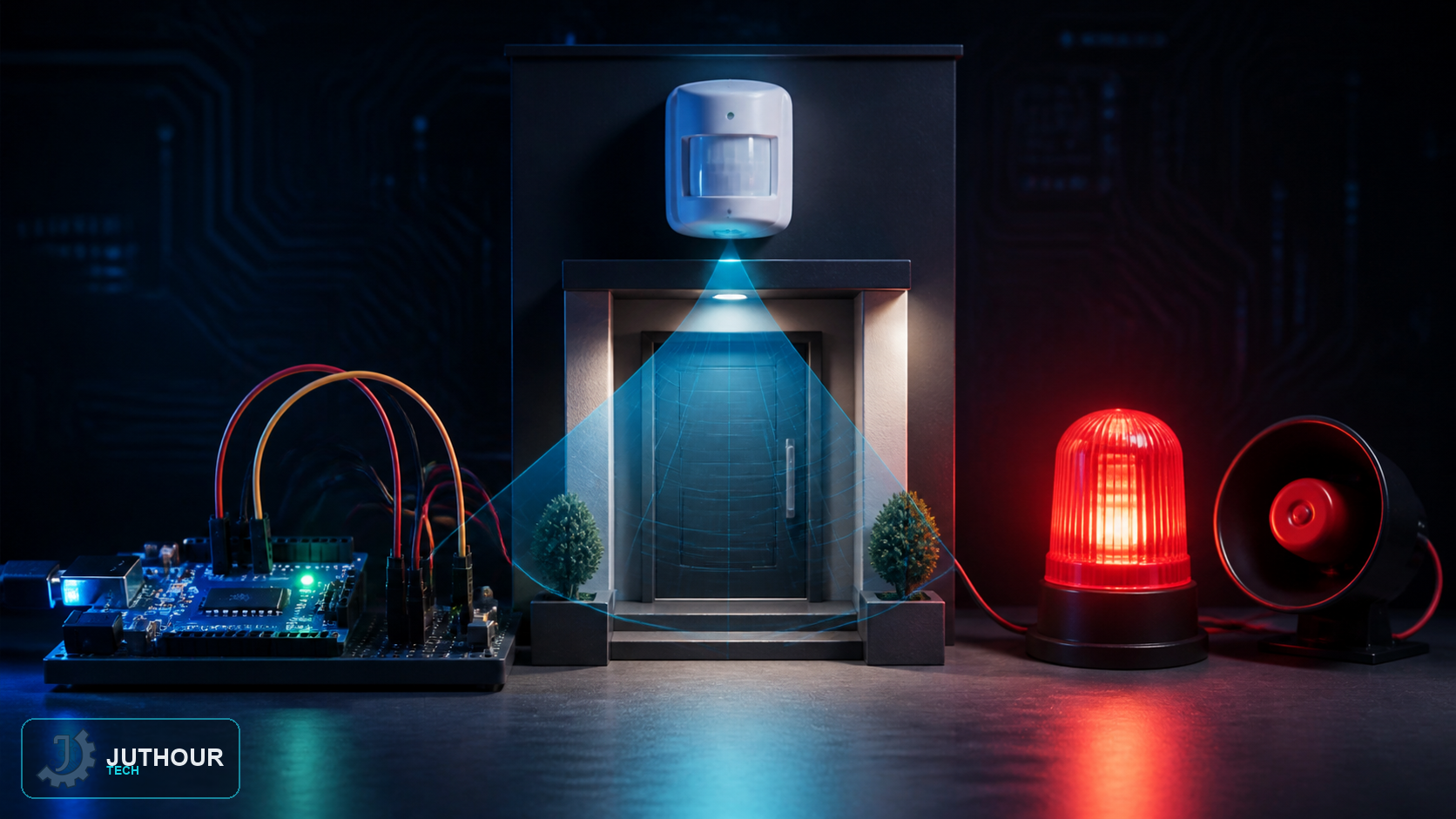
A PIR motion sensor detects changes in infrared energy from warm bodies, making it useful for an educational Arduino motion-alarm prototype.
Parts and wiring
Use an Arduino Uno, a PIR module, a buzzer, and jumper wires. Connect the sensor output to D2 and drive the buzzer from D3 through a suitable transistor stage if its current exceeds the pin rating.
Warm-up and testing
Most PIR modules need a stabilisation period after power-up, often tens of seconds to about a minute. Adjust the sensitivity and hold-time controls gradually, then test away from hot air currents, direct sunlight, and moving heat sources to reduce false triggers.
Program logic
The sketch monitors the output and starts an audible pattern when it changes to HIGH. Add a cooldown interval to prevent repeated alarms and record a timestamp when an RTC is available.
You can find PIR sensors, buzzers, and Arduino boards at Juthour Tech.
اترك تعليقا